Wednesday, May 27, 2009

Pop Culture in the Name of Islam


PDF | Print | E-mail
Written by Yvonne Ridley   
Monday, 24 April 2006
I FEEL very uncomfortable about the pop culture which is growing around some so-called Nasheed artists. Of course I use the term ‘Nasheed artists' very lightly. Islamic ‘boy bands' and Muslim ‘popsters' would probably be more appropriate.

Eminent scholars throughout history have often opined that music is haram, and I don't recall reading anything about the Sahaba whooping it up to the sound of music. Don't get me wrong. I'm all for people letting off steam, but in a dignified manner and one which is appropriate to their surroundings.

The reason I am expressing concern is that just a few days ago at a venue in Central London, sisters went wild in the aisles as some form of pop-mania swept through the concert venue. And I'm not just talking about silly, little girls who don't know any better; I am talking about sisters in their 20's, 30's and 40's, who squealed, shouted, swayed and danced. Even the security guys who looked more like pipe cleaners than bulldozers were left looking dazed and confused as they tried to stop hijabi sisters from standing on their chairs.

Of course the stage groupies did not help at all as they waved and encouraged the largely female Muslim crowd to "get up and sing along." (They're called ‘Fluffers' in lap-dancing circles!)


The source of all this adulation was British-born Sami Yusuf, who is so proud of his claret-colored passport that he wants us all to wave the Union Jacks. I'm amazed he didn't encourage his fans to sing "Land of Hope and Glory." Brother Sami asked his audience to cheer if they were proud to be British ,and when they responded loudly, he said he couldn't hear them and asked them to cheer again.


How can anyone be proud to be British? Britain is the third most hated country in the world. The Union Jack is drenched in the blood of our brothers and sisters across Iraq, Afghanistan, and Palestine. Our history is steeped in the blood of colonialism, rooted in slavery, brutality, torture, and oppression. And we haven't had a decent game of soccer since we lifted the World Cup in 1966.


Apparently Sami also said one of the selling points of Brand UK was having Muslims in the Metropolitan Police Force! Astafur'Allah! Dude, these are the same cops who have a shoot-to-kill policy and would have gunned down a Muslim last year if they could tell the difference between a Bangladeshi and a Brazilian. This is the same police force that has raided more than 3000 Muslim homes in Britain since 9/11. What sort of life is there on Planet Sami, I wonder? If he is so proud to be British, why is he living in the great Middle Eastern democracy of Egypt?

Apparently the sort of hysteria Sami helped encourage is also in America, and if it is happening on both sides of the Atlantic, then it must be creeping around the globe and poisoning the masses. Islamic boy bands like 786 and Mecca 2 Medina are also the subject of the sort of female adulation you expect to see on American Pop Idol or the X-Factor. Surely Islamic events should be promoting restrained and more sedate behavior.

Do we blame the out-of-control sisters? Or do we blame the organizers for allowing this sort of excessive behavior which demeans Islam? Or do we blame the artists themselves?

Abu Ali and Abu Abdul Malik, struggling for their Deen, would certainly not try to whip up this sort of hysteria. Neither would the anonymous heroic Nasheed artists who sing for freedom; check out Idhrib Ya Asad Fallujah, and you will know exactly what I mean.

Fallujah is now synonymous with the sort of heroic resistance that elevated the Palestinians of Jenin to the ranks of the resistance written about in the Paris Communeand the Siege of Leningrad. The US military has banned the playing of any Nasheeds about Fallujah because of the power and the passion it evokes.

If those Nasheeds had sisters running in the streets whooping and dancing, however, the Nasheeds may be encouraged because of haram activity surrounding them.

Quite frankly, I really don't know how anyone in the Ummah can really let go and scream and shout with joy at pleasure domes when there is so much brutality and suffering going on in the world today. The rivers of blood flow freely from the veins of our brothers and sisters from across the Muslim world.

Screaming and shouting the names of musical heroes drown out the screams coming from the dungeons of Uzbekistan where brothers and sisters are boiled alive in vats of water. How many will jump up and down and wave their arms in the air, shouting wildly for justice for our kin in Kashmir, Afghanistan, Chechnya, Palestine, and Iraq?

There are many more killing fields as well across the Asian and Arab world. Will you climb on theater chairs and express your rage over Guantanamo Bay and other gulags where our brothers and sisters are being tortured, raped, sodomized, beaten, and burned? Or will you just switch off this concerned sister and switch on to the likes of Sami Yusuf because he can sell you a pipe dream with his soothing words and melodic voice?

Oh, Muslims, wake up! The Ummah is not bleeding; it is hemorrhaging. Listen not to what is haram. Listen to the pain of your global family.

Sunday, May 17, 2009

USMLE STEP 1 schedule

1st Week: 
BIOCHEMISTRY 
June 8-13 

Monday Chat: 
MOLECULAR BIOLOGY 
Nucleic Acid Structure and Organization 
DNA Replication and Repair; Transcription and RNA Processing 

Tuesday Chat: 
MOLECULAR BIOLOGY (cont) 
The genetic Code, Mutations, and Translation 
Genetic regulation; Recombinant DNA; Genetic testing 

Wednesday Chat: 
MEDICAL GENETICS 
Single-Gene Disorders 
Population genetics 
Cytogenetics 
Gene Mapping and Cloning 
Genetics of Common Diseases 
Genetic Diagnosis and Gene Therapy 

Thursday Chat: 
METABOLISM 
Hormones 
Vitamins 
Overview of Energy Metabolism 
Glycolysis and Pyruvate Dehydrogenase 
Citric Acid Cycle and Oxydative Phosphorylation 
Glycogen, Gluconeogenesis and the Hexose Monophosphate Shunt 


Friday Chat: 
METABOLISM 
Lipid synthesis and storage 
Lipid mobilization and catabolism 
Amino Acids, proteins, and Enzymes 
Amino Acid Metabolism 
Purine and Pyrimidine Metabolism 


2nd Week: 
ANATOMY 
June 15-20 

Monday Chat: 
EMBRYOLOGY: 
Gonad Development; Week 1; Week 2; Weeks 3–8, Embryonic period 

Tuesday Chat: 
HISTOLOGY AND CYTOLOGY 
Cell components 
Nervous Tissue; Muscle tissue 
Lymphoid Organs; Integument 
Respiratory System; Gastrointestinal System 
Renal/Urinary System; Male/Reproductive System 
Female/Reproductive System 

Wednesday Chat: 
GROSS ANATOMY AND ORGANOGENESIS 
Back and nervous System 
Thorax; Abdomen, Pelvis and perineum 
Upper Limb; Lower Limb; Head and Neck 

Thursday Chat: 
NEUROSCIENCE: 
Peripheral Nervous System 
Central Nervous System 
The Ventricular System 
The Spinal Cord 
The Brain Stem 
The Cerebellum 
Visual Pathways 
Diencephalon 
Basal Ganglia 
Cerebral Cortex 
The Limbic System 


Friday Chat: 
(Begin Physiology because short week for Thanksgiving) 
GENERAL TOPICS 
Membrane Transport 
Body Compartments 

EXCITABLE TISSUE 
Ionic Equilibrium and Resting Membrane Potential 
The Neuron Action potential 
Synaptic Transmission 


3rd Week: 
PHYSIOLOGY (cont) 
June 22-27 

Monday Chat: 
PERIPHERAL CIRCULATION 
General Aspects of the Cardiovascular System 
Regulation of Blood flow 

SKELETAL MUSCLE 
Excitation-Contraction Coupling 
Skeletal Muscle Mechanics 

CARDIAC MUSCLE 
Electrical activity of the heart 
Heart muscle mechanics 

Tuesday Chat: 
RESPIRATION 
Lung Mechanics 
Alveolar-Blood Gas Exchange 
Transport of O2 and CO2 and the regulation of respiration 
Four causes of Hypoxemia 

RENAL PHYSIOLOGY 
Renal processes 
Clearance 
Regional transport 

ACID BASE DISTURBANCE 

Wednesday Chat: 
ENDOCRINOLOGY 
Mechanisms of Hormone action 
The Hypothalamic anterior Pituitary system 
Adrenal hormones 
ADH and regulation of Osmolarity and ECF 
The Endocrine pancreas 
Growth Hormone 
Adrenal Medulla 
Hormonal Control of Calcium and Phosphate 
Thyroid Hormones 
Male reproductive system 
Female reproductive system 

GASTROINTESTINAL PHYSIOLOGY 


Thursday Chat: 
Off for Thanksgiving 


Friday Chat: 
Off for Thanksgiving, or review of Physio 


4th Week: 
BEHAVIORAL SCIENCE 
June 29-July 4 

Monday Chat: 
Epidemiology,Statistics 
Social Life in the US 
Substance Abuse 

Tuesday Chat: 
Human Sexuality 
Learning and Behavior Modification 
Defense mechanisms 


Wednesday Chat: 
Psychologic health and Testing 
Child Development 
Sleep and sleep disorders 

Thursday Chat: 
Organic Disorders 
Psychopharmacology 
Diagnostic and Statistical Manual IV (DSM IV) 


Friday Chat: 
Ethical and legal Issues 
Physician-patient relationships 


5th Week: 
PATHOLOGY by Goljan 
July 6-11 

Monday Chat: 
1. Cell Injury 
2. Inflammation 

Tuesday Chat: 
3. Fluids/hemodynamics 
4. Neoplasia 


Wednesday Chat: 
5. RBC and WBC 
6. Lymphoproliferatives 

Thursday Chat: 
7. Coagulation 
8. Blood Bank 

Friday Chat: 
9. Cardiovascular 
10. Respiratory 


6th Week: 
PATHOLOGY by Goljan (cont)
July 13-18 

Monday Chat: 
11. Gastrointestinal 
12. Hepatobiliar / Pancreas 

Tuesday Chat: 
13. Renal/ Lower Urinary 
14. STD / Gynecology 


Wednesday Chat: 
15. Endocrine 
16. Musculoskeletal 

Thursday Chat: 
17. Skin 
18. CNS/Special senses 

Friday Chat: 
Overall Goljan review 


7th Week: 
IMMUNOLOGY 
July 20-25 

Monday Chat: 
INTRODUCTION 
Innate Immunity 
Acquired (Adaptative) Immunity 
Immunoglobulins and T-cell Receptors 
Immunoglobulins and T-cell Receptor (TCR) Genes 

Tuesday Chat: 
Antigens and Immunogens 
Major Histocompatibility Complex (MHC) 
The Lymphoid System 
The Immune Response 
T cell subsets and Interleukins 
Cell-mediated Immunity 
Complement 


Wednesday Chat: 
Failures of the Immune System: Hypersensitivity 
Failures of the Immune System: Immunodeficiency 
Failures of the Immune System: Autoimmunity 
Regulation and Tolerance 
Transplantation Immunology 
Immunology Laboratory Procedures 

Thursday Chat: 
Off 

Friday Chat: 
Off  


8th Week: 
MICROBIOLOGY 
July 27-August 1 

Monday Chat: 
General Microbiology 
Medically Important bacteria 

Tuesday Chat: 
Medically Important Fungi 
Medical Parasitology 


Wednesday Chat: 
Medically Important Viruses 

Thursday Chat: 
Microbial Genetics/Drug Resistance 
Clinical Infectious Disease 
Comparative Microbiology 
Flow Charts/Clue Sheets 


Friday Chat: 
Off 


9th Week: 
PHARMACOLOGY*** 
AUgust 3- 8 

Monday Chat: 
GENERAL PRINCIPLES**: 
Pharmacokinetics; 
Pharmacodynamics 
AUTONOMIC PHARMACOLOGY**: 
The Autonomic nervous System; 
Cholinergic Pharmacology; 
Adrenergic Neuroeffector Junctions; 
Autonomic Drugs: The Eye and Cardiovascular System; 
Autonomic Drug Summary 

Tuesday Chat: 
CARDIAC AND RENAL PHARMACOLOGY***: 
Fundamental Concepts; 
Antiarrythmics Drugs; 
Antihypertensive Drugs; 
Drugs for heart Failure; 
Antianginal Drugs; 
Diuretics; 
Antihyperlipidemics 

Wednesday Chat: 
- CNS PHARMACOLOGY*** 

Thursday Chat: 
- ANTIMICROBIAL AGENTS**: 
Antibacterial Agents; 
Antifungal Agents; 
Antiviral* Agents; 
Antiprotozoal Agents and the Antimicrobial Drug List 
- DRUGS FOR INFLAMMATORY AND RELATED DISORDERS 

Friday Chat: 
- DRUGS USED IN BLOOD AND ENDOCRINE DISORDERS: 
Blood Pharmacology; Endocrine Pharmacology 
- ANTICANCER DRUGS* 
- IMMUNOPHARMACOLOGY 
- TOXICOLOGY: Anticancer drugs; Immunopharmacology; Toxicology

___________________
once we have a destiny we have acquired the reason of life, but life can press us to keep ourselves away from it. a strange force comes to keep ourselves limited. It is determination which keeps limitations away and turn the table around. it is imagination which makes us infinite.

Tuesday, April 28, 2009

Friday, March 6, 2009

Footprints in the Sand


One night I dreamed I was walking along the beach with the Lord.
Many scenes from my life flashed across the sky.
In each scene I noticed footprints in the sand.
Sometimes there were two sets of footprints,
other times there were one set of footprints.

This bothered me because I noticed
that during the low periods of my life,
when I was suffering from
anguish, sorrow or defeat,
I could see only one set of footprints.

So I said to the Lord,
"You promised me Lord,
that if I followed you,
you would walk with me always.
But I have noticed that during
the most trying periods of my life
there have only been one
set of footprints in the sand.
Why, when I needed you most,
you have not been there for me?"

The Lord replied,
"The times when you have
seen only one set of footprints in the sand,
is when I carried you."

Mary Stevenson

Wednesday, March 4, 2009

You can clean Masjid!

Clean masjid !

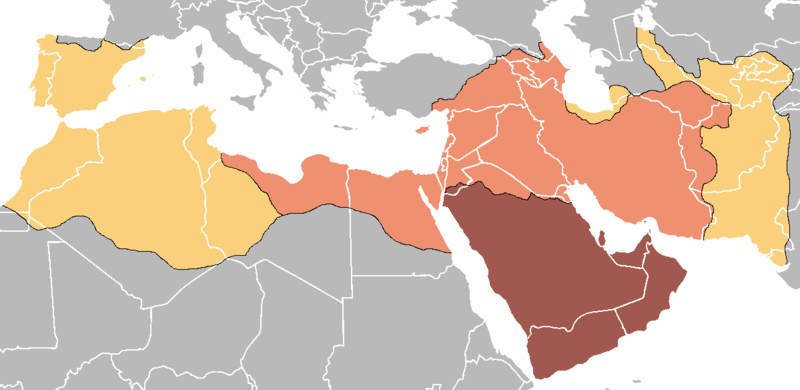
Islamic empire


██ Expansion under the Prophet Mohammad, 612-632

██ Expansion during the Rightly Guided Caliphate, 635-680

██ Expansion during the Umayyad Caliphate, 661-750


Ibn Seena

Ibn Seena

Avicenna

From Wikipedia, the free encyclopedia

Jump to: navigation, search
Persian Scholar
Name: Alī Sīnā Balkhi (Avicenna)
Title: Sharaf al-Mulk, Hujjat al-Haq, Sheikh al-Rayees
Birth: approximately 980 CE / 370 AH
Death: 1037 CE / 428 AH
Ethnicity: Persian[1]
Region: Central Asia and Persia
School tradition: Avicennism[2]
Main interests: Islamic medicine, alchemy and chemistry in Islam, Islamic astronomy, Islamic ethics, early Islamic philosophy, Islamic studies, logic in Islamic philosophy, geography, mathematics, Islamic psychological thought, physics, Persian poetry, science, Kalam, Paleontologist
Notable ideas: Father of modern medicine and the concept of momentum, founder of Avicennism and Avicennian logic, forerunner of psychoanalysis, pioneer of aromatherapy and neuropsychiatry, and important contributor to geology.
Works: The Canon of Medicine
The Book of Healing
Influences: Hippocrates, Sushruta, Charaka, Aristotle, Galen, Plotinus, Neoplatonism, Indian mathematics, Muhammad, Ja'far al-Sadiq, Wasil ibn Ata, al-Kindi, al-Farabi, Muhammad ibn Zakariya ar-Razi, Abu Rayhan Biruni, Muslim physicians
Influenced: Abu Rayhan Biruni, Omar Khayyám, al-Ghazali, Fakhr al-Din al-Razi, Abubacer, Averroes, Shahab al-Din Suhrawardi, Nasīr al-Dīn al-Tūsī, Ibn al-Nafis, Scholasticism, Albertus Magnus, Duns Scotus, Thomas Aquinas, Jean Buridan, Giambattista Benedetti, Galileo Galilei, William Harvey, René Descartes, Spinoza

Abū ‘Alī al-Ḥusayn ibn ‘Abd Allāh ibn Sīnā Balkhi', known as Abu Ali Sina Balkhi[3][4] (Persian: ابوعلی سینا بلخى) or Ibn Sina (Persian: ابن سینا) and commonly known in English by his Latinized name Avicenna (Greek: Aβιτζιανός, Abitzianos),[5] (born c. 980 near Bukhara, contemporary Uzbekistan, died 1037 in Hamedan in modern Iran) was a Persian[6] polymath and the foremost[7] physician and philosopher of his time. He was also an astronomer, chemist, geologist, logician, paleontologist, mathematician, physicist, poet, psychologist, scientist, and teacher. [8]

Ibn Sīnā wrote almost 450 treatises on a wide range of subjects, of which around 240 have survived. In particular, 150 of his surviving treatises concentrate on philosophy and 40 of them concentrate on medicine.[9][10] His most famous works are The Book of Healing, a vast philosophical and scientific encyclopaedia, and The Canon of Medicine,[1] which was a standard medical text at many medieval universities.[11] The Canon of Medicine was used as a text-book in the universities of Montpellier and Louvain as late as 1650.[12] Ibn Sīnā developed a medical system that combined his own personal experience with that of Islamic medicine, the medical system of the Greek physician Galen,[13] Aristotelian metaphysics[14] (Avicenna was one of the main interpreters of Aristotle)[15], and ancient Persian, Mesopotamian and Indian medicine. He was also the founder of Avicennian logic and the philosophical school of Avicennism, which were influential among both Muslim and Scholastic thinkers.

Ibn Sīnā is regarded as a father of early modern medicine,[16][17] and clinical pharmacology[18] particularly for his introduction of systematic experimentation and quantification into the study of physiology,[19] his discovery of the contagious nature of infectious diseases,[20] the introduction of quarantine to limit the spread of contagious diseases, the introduction of experimental medicine, evidence-based medicine, clinical trials,[21] randomized controlled trials,[22][23] efficacy tests,[24][25] clinical pharmacology,[24] neuropsychiatry,[26] risk factor analysis, and the idea of a syndrome,[27] and the importance of dietetics and the influence of climate and environment on health.[28] He is also considered the father of the fundamental concept of momentum in physics,[29] and regarded as a pioneer of aromatherapy for his invention of steam distillation and extraction of essential oils.[30] He also developed the concept of uniformitarianism and law of superposition in geology.[31]

George Sarton, an author of the history of science, wrote in the Introduction to the History of Science:

"One of the most famous exponents of Muslim universalism and an eminent figure in Islamic learning was Ibn Sina, known in the West as Avicenna (981-1037). For a thousand years he has retained his original renown as one of the greatest thinkers and medical scholars in history. His most important medical works are the Qanun (Canon) and a treatise on Cardiac drugs. The 'Qanun fi-l-Tibb' is an immense encyclopedia of medicine. It contains some of the most illuminating thoughts pertaining to distinction of mediastinitis from pleurisy; contagious nature of phthisis; distribution of diseases by water and soil; careful description of skin troubles; of sexual diseases and perversions; of nervous ailments."[20]